


More Opportunities in the Value Chain Your Tribe Should Consider
Data centers are expanding rapidly across the U.S., driven by cloud computing, digital services, and AI. This growth has created intense demand for sites with reliable power, connectivity, and predictable permitting timelines—conditions that can align well with Tribal economic development strategies when approached on Tribal terms.While many conversations start and stop at leasing land, Tribes can capture significantly more value by engaging additional parts of the data center ecosystem: power, infrastructure, operations, services, workforce, and data sovereignty. This brief summarizes opportunity areas and the key considerations that help determine whether a data center strategy fits your community.
Start by Broadening the Definition: Not all data centers are Hyperscale AI.
“Data Center” can mean very different facility types, each with different impacts and benefits:
- Small/modular deployments (edge sites serving local/regional needs)
- Mid-sized facilities serving enterprises and governments
- Multi-tenant colocation sites (many customers share a facility)
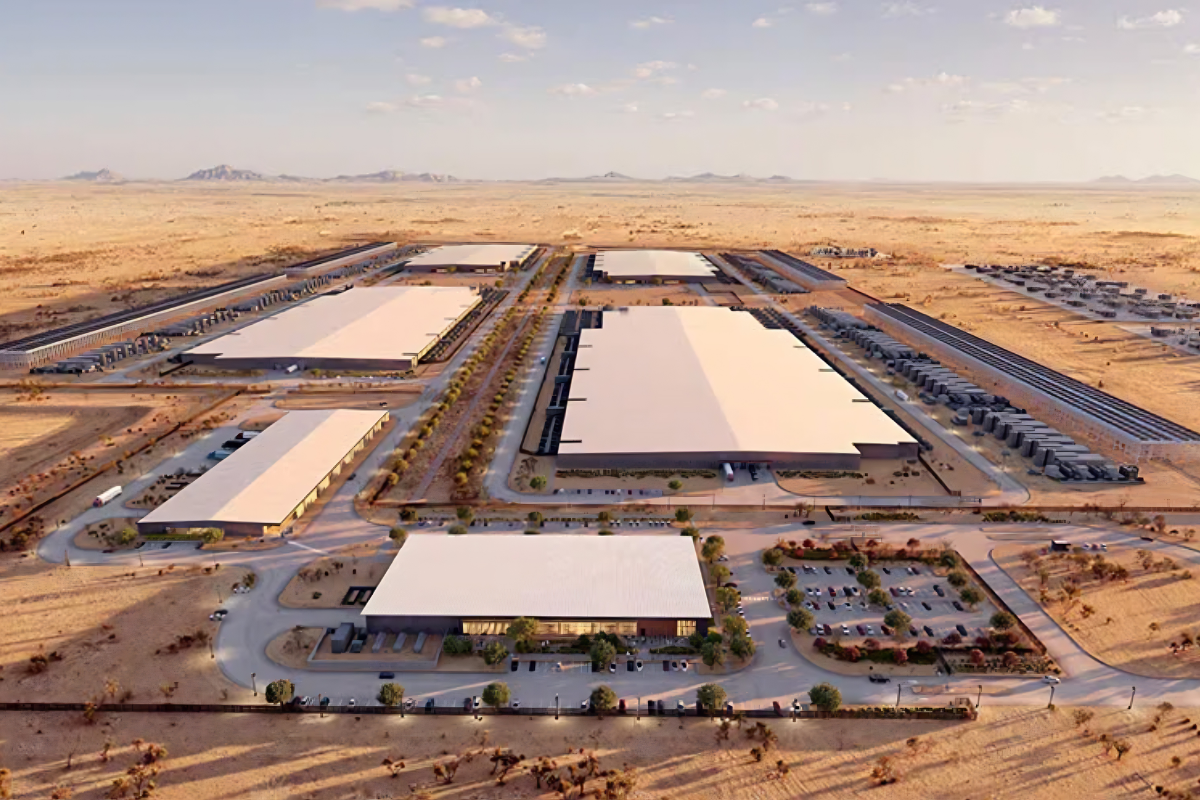
- Large-scale campuses, including AI-oriented builds
This matters because water use, power demand, job counts, land needs, and community impacts scale differently. The best-fit option for a Tribe may be a smaller or mid-sized facility with more manageable resource requirements and easier market positioning—not necessarily the biggest project available.
The “beyond land lease” Value Stack: Where Tribes Can Participate
A land lease can be a baseline revenue stream, but it’s often the lowest-margin role in a data center development. Consider where you want to sit in the value chain:
Power: sell electricity, not just acreage
Power is frequently the central constraint for data centers. Tribes may be able to create value by:
- Developing generation (renewables, firm generation, hybrid systems, storage)
- Selling power directly to a data center through long-term contracts
- Hosting on-site/behind-the-meter power that reduces reliance on congested grids
- Supporting interconnection strategy (where grid connection is required or preferred)
In many cases, power-related revenue (and associated infrastructure ownership) can outweigh land-lease returns. Even if a data center is not located on Tribal land, a Tribe may still participate as an energy supplier depending on transmission access and market structure.
Economic development lens: Treat power as a co-equal (or primary) development track, not just a utility requirement.
Infrastructure Upgrades: negotiate community-beneficial investments
Data centers often require upgrades that can also benefit surrounding communities if structured correctly, such as:
- Fiber extensions and improved broadband
- Substation, feeder, or distribution upgrades
- Road and site access improvements
- Water, wastewater, and stormwater system enhancements
- Security and emergency response coordination
The opportunity is not simply that a developer might build these assets, but that Tribes can negotiate terms to ensure infrastructure is sized, routed, and governed to create durable public value—especially broadband and electric distribution resiliency.
Economic Development Lens: Use data center interest to accelerate infrastructure that supports other Tribal priorities (housing, clinics, education, business parks, public safety).
Long-term Contracting and Operations: recurring revenue and capacity building
Data centers do not typically create large numbers of permanent jobs, but they do create:
- Significant construction employment during build-out
- A smaller set of high-skill operations roles (facilities, network, controls, security, compliance)
- Ongoing vendor and service contracting (maintenance, electrical, HVAC, landscaping, cleaning, parts supply, fueling, logistics)
Separately, associated energy systems (generation, microgrid operations, substations) can create more ongoing technical jobs than the data center itself.
Economic Development Lens: Target recurring contracts and technical capacity development rather than focusing solely on headcount.
Service-layer Participation: move up the stack
Tribes can also create value by offering services that sit above the physical facility:
- Managed IT services for regional organizations
- Secure hosting for Tribal government, health, and education systems
- Connectivity services or carrier-neutral meet-me rooms
- Virtualized compute offerings for local enterprises and startups
Each step closer to the services customers actually buy can improve margins, deepen customer relationships, and create more skilled employment pathways.
Economic Development Lens: Consider a phased strategy: start with colocation, then add services as experience and market demand grow.
Data Sovereignty: Keep Tribal Data on Tribal Land
Data centers can support sovereignty in modern terms by enabling:
- Hosting of Tribal government and enterprise systems locally
- Stronger control over sensitive community data (health, public safety, courts, enrollment)
- Reduced dependence on distant providers for critical digital services
Even if a Tribe never builds a large facility, establishing secure local hosting and connectivity can be a strategic investment.
Economic Development Lens: Data infrastructure can be treated like roads and utilities—foundational to long-term self-determination and business diversification.
Key Feasibility Factors to Evaluate Early
Before engaging developers or signing preliminary documents, Tribal teams should assess fit across a few core domains.
Power Availability and Delivery Timeline
Data center developers often prioritize speed to power. Evaluate:
- Existing electrical service and capacity
- Interconnection feasibility and timelines
- Options for on-site generation and storage
- Resiliency requirements and backup generation approach
- Whether the project could affect local rates or reliability
Fiber and Network Connectivity
Most data centers require high-capacity connectivity. Evaluate:
- Proximity to fiber routes and carrier access
- Cost and timeline to build lateral connections
- Whether a Tribe can co-invest to expand broadband access more broadly
Water and Cooling Approach
Water concerns are often community-defining. Evaluate:
- Cooling technology options (including low-water or closed-loop approaches)
- Expected daily water needs under peak conditions
- Water sourcing, discharge, and long-term drought risk
- Monitoring and reporting requirements you want contractually
Site and Community Impacts
Assess:
- Noise, lighting, traffic, construction disruption
- Proximity to homes, schools, hospitals, culturally sensitive areas
- Environmental constraints and mitigation requirements
- Housing and workforce impacts during construction peaks
Lease Term, Governance, and Regulatory Pathway
Large data center projects may seek long lease terms. Evaluate:
- Tribal legal authority and leasing framework
- Whether the structure protects sovereignty and enforcement rights
- Dispute resolution, jurisdiction, and compliance expectations
- Tax and revenue implications
Common Deal Risks—and How to Reduce Them
Data center development can attract intermediaries and speculative proposals. Practical safeguards include:
- Require proof of capability: track record, financing plan, equipment procurement plan, realistic schedule
- Avoid exclusivity without performance: limit “site control” periods and require milestones
- Do not accept vague resource claims: insist on engineering-grade power and water assumptions
- Plan for e-waste: require responsible handling and documented disposal/recycling pathways
Use specialized legal and technical advisors: contracts must address power, water, uptime, security, and long-term governance clearly. DOE’s Office of Indian Energy provides site evaluation support, early-stage technical analysis, and legal technical assistance resources.
A Recommended Tribal Strategy: Stage-gated Development
A staged approach can preserve optionality and reduce risk:
- Screening & goals: define community priorities and non-negotiables (water, environmental limits, cultural protections).
- Pre-feasibility: high-level power / fiber / water / site assessment; identify viable facility scale(s).
- Partner diligence: evaluate developers/operators; confirm financing and execution capacity.
- Term sheet with protections: milestones, reporting, community benefits, and enforcement mechanisms.
Build & operate: emphasize workforce development, contracting pathways, and long-term asset value.
Conclusion: A Data Center Strategy Can Be More Than a Land Deal
For Tribal Economic Development leaders, the most durable opportunity is often not the lease itself—it’s the broader platform a data center can catalyze:
- new energy assets and revenue,
- upgraded broadband and utility infrastructure,
- recurring service contracts,
- technical workforce development,
- and stronger data sovereignty.
The best outcomes come from matching facility type and scale to local realities, negotiating for community-beneficial infrastructure, and positioning the Tribe higher in the value chain where practical.
ECONOMIC DEVELOPMENT IN INDIAN COUNTRY
Other consultants, companies, philanthropy, and federal government agencies approach “Economic Development” as a catch-all bin that is miles-long and only a few inches deep.
RWLGS is successful with our own approach. Our Economic Development solutions and consulting practice specialize in a handful of bins that are small, focused, and much deeper. We offer well-informed insight and definitive expertise from the world of Forbes Global 2000 corporations combined with our own lived experience on the pueblo lands of the Southwest and across Indian County.